
Commercial investment property is usually valued according to the income it can reliably produce. That sounds simple, but the hard part is deciding which income is dependable, which expenses are real and what return a buyer will require for the risk involved.
A seller may focus on gross rent. A buyer may focus on the repairs, vacancy and financing that come after it. The market ultimately prices the durability and risk of the net income—not merely the amount collected each month.
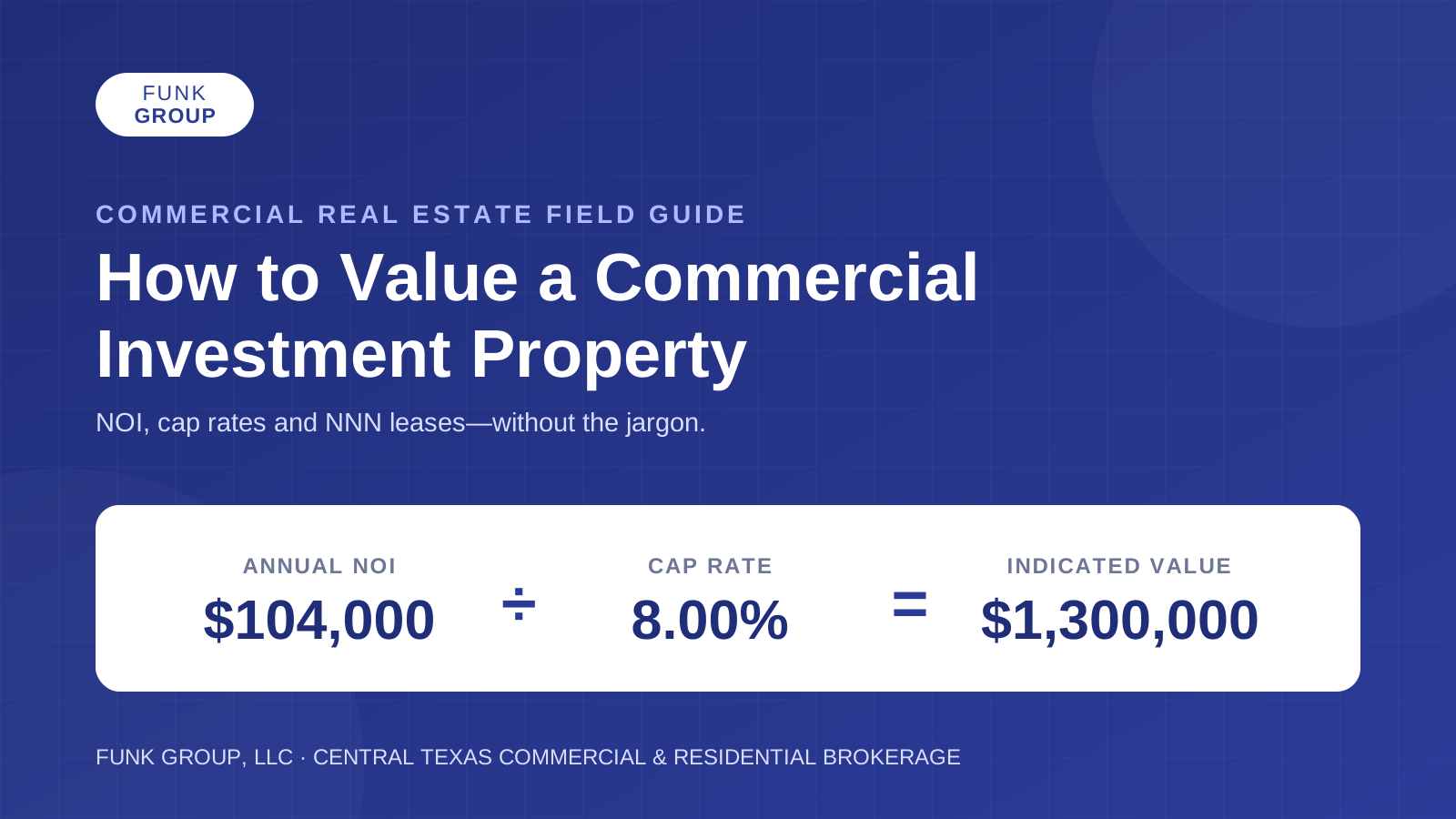
The basic valuation formula
The equation is easy. Determining an accurate NOI and an appropriate cap rate requires judgment.
Start with a defensible NOI
Net operating income is the income remaining after normal property-level operating expenses, but before mortgage payments, depreciation and income taxes.
Income commonly included
- Base rent actually being collected
- Contractual tenant reimbursements
- Storage, parking, signage or other recurring property income
- Reasonable market rent for vacant or below-market space, when clearly identified as projected rather than current income
Operating expenses commonly included
- Property taxes and insurance
- Repairs, maintenance and common-area expenses
- Utilities paid by the ownership
- Management and administrative expenses
- Recurring grounds, security and service-contract expenses
- A realistic vacancy and collection allowance
Debt service is not included in NOI because different buyers may finance the same property differently. Major capital improvements are also normally analyzed separately rather than treated as ordinary annual operating expenses.
A simple NOI example
| Base rental income | $120,000 |
| Tenant reimbursements and other income | +$24,000 |
| Vacancy and collection allowance | −$6,000 |
| Operating expenses | −$34,000 |
| Annual NOI | $104,000 |
What a cap rate actually means
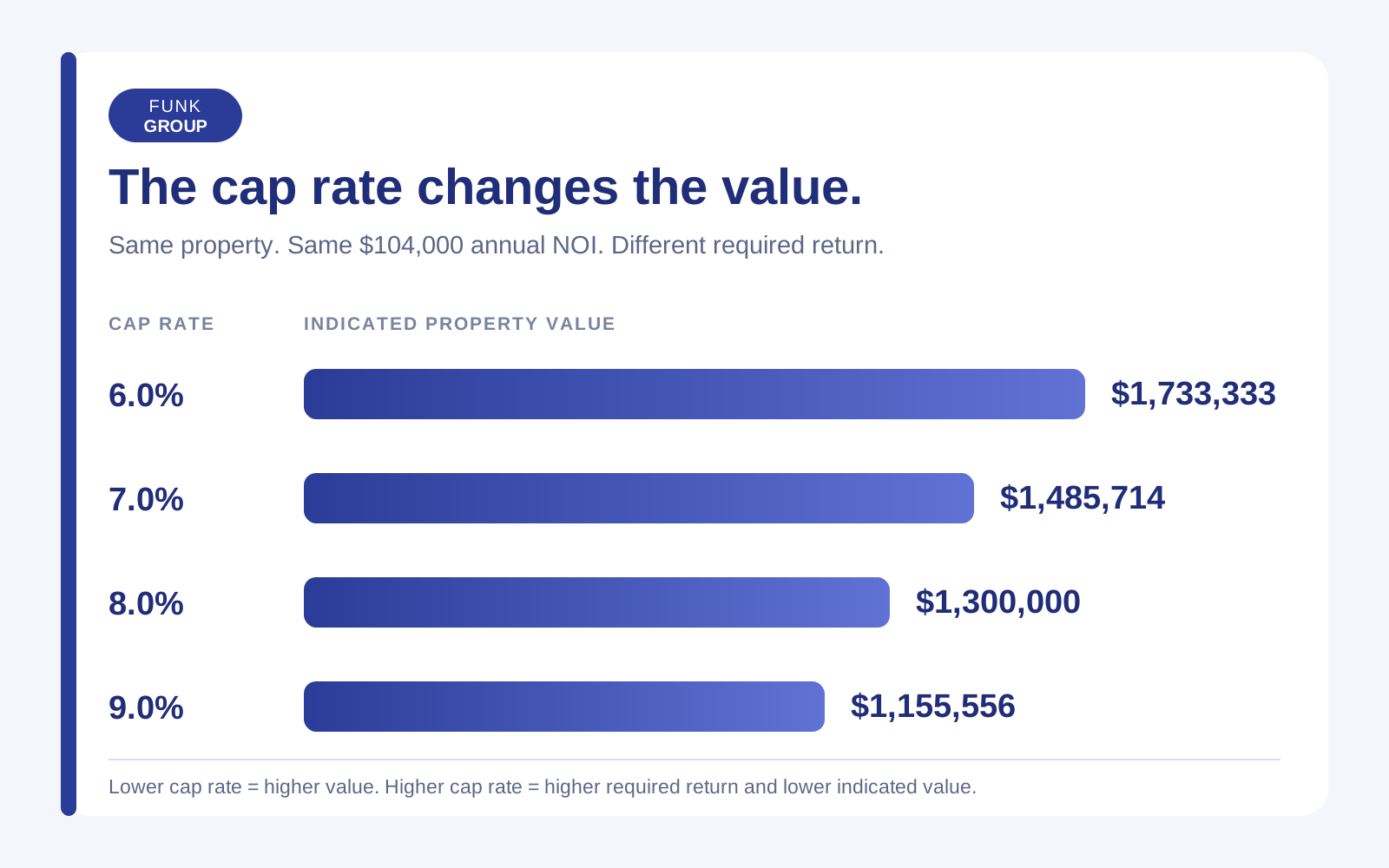
A cap rate is the property’s annual NOI divided by its price. It measures the anticipated first-year, unleveraged return at that price.
A lower cap rate produces a higher indicated value. A higher cap rate produces a lower indicated value. Buyers accept lower cap rates when they perceive the income as safer, more durable or more likely to grow. They demand higher cap rates when they see more uncertainty, management burden, capital needs or resale risk.
Why NNN does not automatically establish value
A triple-net—or NNN—lease generally requires the tenant to pay or reimburse property taxes, insurance and common-area or maintenance expenses in addition to base rent. That can make the landlord’s income more predictable, but “NNN” is a lease structure, not a valuation method.
The lease still has to be read. One NNN lease may place nearly every property expense on a financially strong tenant. Another may leave the owner responsible for the roof, structure, parking lot, management or unreimbursed expenses. The economic value of those leases is not the same.
Factors that influence the value of a NNN investment
- Tenant credit and the strength of the lease guaranty
- Remaining lease term and renewal probability
- Contractual rent increases
- Whether the rent is above, below or near market
- Landlord responsibilities for roof, structure and capital items
- How easily the property could be reused or re-leased if the tenant leaves
Different investments require different returns
There is no universal “commercial real estate cap rate.” Each property type attracts a different buyer pool and presents a different combination of income durability, operating intensity and future risk.
Single-tenant NNN
Often driven by tenant credit, remaining lease term, guaranty strength and future rent increases.
Multi-tenant retail
Lease rollover, tenant mix, co-tenancy, expense recoveries and local demand become more important.
Industrial and flex
Clear height, loading, yard space, power, location and the building’s usefulness to future occupants influence risk.
Office
Tenant retention, build-out costs, vacancy duration and changing workplace demand may require a higher risk premium.
Self-storage and RV storage
These are operating businesses as well as real estate. Occupancy, rate management, unit mix, security and expansion potential matter.
Land or redevelopment
Vacant land generally has no NOI to capitalize. Comparable sales, entitlement risk, access, utilities and highest-and-best use drive value.
Even within the same category, two properties can warrant different cap rates. A long-term lease to a creditworthy national tenant is not directly comparable to a short-term lease to a local operator. A stabilized storage facility is not the same investment as one that still needs substantial lease-up and capital.
Economic conditions also move cap rates
Cap rates reflect property-level risk, but they also compete with the returns available elsewhere in the economy. Investors consider what they can earn on lower-risk alternatives and what it costs to borrow money.
Interest rates and financing
When debt becomes more expensive, buyers may need a lower price to achieve acceptable cash flow and debt-service coverage. Lenders may also reduce proceeds, requiring more equity. Both can place upward pressure on cap rates.
Treasury yields and alternative investments
If investors can earn more from comparatively liquid, lower-risk investments, commercial real estate must offer enough additional return to compensate for illiquidity, management and property risk.
Inflation and expected NOI growth
Inflation can increase operating expenses, but it may also support rent growth. A property with contractual increases or strong mark-to-market potential may remain attractive even when current borrowing costs are elevated.
Capital availability and investor sentiment
When lenders and equity investors compete aggressively for deals, cap rates can compress. When capital becomes cautious or a property sector falls out of favor, required returns can rise quickly.
Cap rates and interest rates are related, but they do not move perfectly together or immediately. Expected rent growth, supply, tenant demand and the amount of investment capital seeking property can partially offset—or amplify—changes in borrowing costs.
NOI is not the same as cash flow
NOI measures property operations before financing. Cash flow is what remains after mortgage payments and other ownership-level obligations. A property can have a healthy NOI and still produce weak cash flow if the buyer pays too much, borrows at an unfavorable rate or faces near-term capital expenses.
That is why serious buyers also evaluate:
- Debt-service coverage ratio
- Cash-on-cash return
- Loan-to-value and required equity
- Near-term capital expenditures and reserves
- Lease rollover and downside scenarios
- Potential resale value and exit cap rate
Common valuation mistakes
- Capitalizing gross rent instead of NOI. Gross income ignores the cost of producing it.
- Using projected income as though it already exists. Lease-up potential can create value, but it also carries time, cost and risk.
- Ignoring management. A property does not become expense-free because the current owner manages it personally.
- Calling reimbursements pure income. A reimbursement usually corresponds to an expense elsewhere in the statement.
- Assuming every NNN lease is identical. The actual lease language controls.
- Applying a cap rate from the wrong property type or market. The required return must match the asset, location, lease and economic environment.
- Ignoring deferred maintenance and capital needs. A roof, paving or major mechanical expense may not appear in trailing NOI but can still affect price.
The practical takeaway
Valuation begins with normalized, supportable NOI. The market then applies a return requirement based on the quality and expected growth of that income, the property’s physical and location risk, the lease structure, available financing and broader economic conditions.
The formula may be simple. The assumptions are where value is won or lost.
This article is for general educational purposes and is not an appraisal, tax opinion, legal opinion or investment recommendation. Property value and market cap rates require property-specific analysis and current market evidence.